
While there were concerns about the security aspect of drones, top government officials were of the view that restricting the drone industry would stifle a sunrise sector which holds significant promise for future, reports Arindam Majumder.
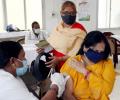
With the threat of a third Covid-19 wave looming large, companies are scrambling to protect employees and keep operations safe--from a no-jab-no-entry-at-workplace policy to ramping up vaccination, it's an all-out effort to prevent the scale of devastation seen in the first two waves. At least two top steel companies--Tata Steel and ArcelorMittal Nippon Steel India (AM/NS India)--are pushing for vaccination certificates for entry into work premises. AM/NS India, a joint venture between world's leading steelmaker, ArcelorMittal, and Japan's Nippon Steel, is set to make vaccination the certificate a requirement from July 1.

A 2019 investigation of Bombay Dyeing by market regulator Sebi has put a brake on the initial public offering process of sister company Go Air. The Wadia group-owned low cost airline had earlier planned to launch the IPO to raise Rs 3,600 crore by August, but may be forced to postpone it by a month or two as Sebi completes its investigation.
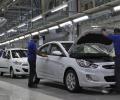
As the second wave of the Covid-19 pandemic abates, India's automakers are hopeful of a quick recovery in sales volumes, led by better rural sentiment, low interest rates, improved availability of finance and a gradual uptick in business and economic activity. In fact, companies have started to ramp up production already, encouraged by high order books and the growing preference for private transport in both rural and urban areas as a means to avoid infections. In early April, the industry had been bullish as the sales trend for March showed that the effects of the Covid-19 pandemic had been left behind. The total vehicle sales had grown by 77 per cent, albeit on a lower base, and for the past few months, sales had consistently touched 300,000 units per month.
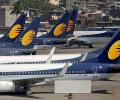
The Kalrock-Jalan consortium - new owners of Jet Airways - has got an assurance from around 30 airports that if the airline restarts operations, 170 pairs of slots can be made available. However, whether those slots will be according to the airline's demand will depend on the order of the insolvency court, which is slated to come next week. Sources said the new management feels it is extremely important that some of those slots are restored or else its business plan of operating Jet as a premium carrier will not be viable.
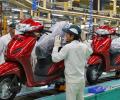
'The fundamentals look strong, but we will have to see if they translate into actual demand.' 'Because the April-May marriage season didn't see much sales due to the lockdown.'

Close to half a dozen more three-row premium mid-size models are expected to hit the road over the next two years.

Analysts remain sceptical on the profitability from freighter business, saying that once normal air transport resumes and there's abundant belly capacity, the traditional economics of air cargo may not be that lucrative.

However, the tender criteria demands that an entity must be eligible to conduct Beyond Visual Line of Sight operations in order to become eligible. Currently, no drone companies are eligible to do BVLOS operations, reports Arindam Majumder.
Private equity firm Carlyle Group and associates will acquire a controlling stake of over 50 per cent in PNB Housing Finance by investing in the Rs 4,000 crore preferential issue of equity and warrants of the Delhi-based mortgage lender. After the proposed transactions, expected to be completed by January 1, 2022, Carlyle will also have the right to nominate the chairperson of PNB Housing Finance (PNB HF). This right will continue as long as it holds at least 40 per cent of the share capital on a fully diluted basis.


Since April, India has seen multiple strains of the coronanavirus sweep the nation, upending life and businesses alike. Out-of-home retail and discretionary categories such as durables, auto, fashion, lifestyle, hospitality, food services, travel, and tourism have been the worst-hit as Covid cases remain high, leaving state governments with no option but to curtail mobility and economic activity.
IndiGo, India's largest airline, is in talks to raise fresh funds as a second wave of pandemic has led to collapse in travel demand. The airline may look to raise Rs 3,500-4,000 crore. On Monday, only 97,761 passengers flew. With flyers cancelling bookings, airlines had to put aside flights and operated only 1,306 of them.
The bank expects to grow loan book by 10 per cent in the current financial year with calibrated exposure to corporate accounts and thrust on the retail segment.

The finance ministry has asked public sector banks (PSBs) to postpone the annual exercise of promoting and transferring their staff in the wake of the Covid-19 pandemic. The advisory issued by the Department of Financial Services (DFS) states that the promotion process has coincided with a spike in Covid-19 cases across the country along with localised lockdowns and an increase in micro-containment zones. As there are cases of bank employees or their family members being hospitalised due to Covid-19, bank, insurance companies and financial institutions must take cognizance of the issue, the advisory issued by DFS said.

At risk of entrenched rough times are sectors like hospitality and those with discretionary spends.
The timeline for disinvestment of Air India and Bharat Petroleum Corporation (BPCL) may be pushed by two to three months due to impact of the second Covid-19 wave. However, the government is confident of wrapping up the sale of the two companies by FY22 and meeting the disinvestment target of Rs 1.75 trillion. This will be achieved by sale of government stake in core and non-core public sector undertakings (PSUs).

According to government data, the Centre procured only 35,179 ventilators out of the 50,000 originally ordered.

The plan was to expand further, add more branches and also eventually become the third bank in India to start a wholly owned subsidiary after Singapore's DBS Bank and State Bank of Mauritius, but those plans never materialised due to lack of scale and rising non-performing assets in the country.

The fairy tale turnaround story has, however, taken a few knocks after a second wave of the pandemic has brought a series of default notices and has posed the toughest test for the 55-year old Singh to save the airline he founded and sold to the Marans only to assume control later.
 © 2026 Rediff.com - Investor Information - Advertise with us - Disclaimer - Privacy Policy - Sitemap - Feedback - About us - Terms of use - Grievances